Low Cost, High Impact? The Growing Potential of QR Codes

The other week, a woman asked me what she could do with little time and a little budget that would have a high impact. Her question was poignant and just about everyone in the room at the time could relate. Maybe you can. The phrase I often hear is “low risk, high impact.” Now however, with budgets being stretched like Mr. Fantastic–the focus is even more so: “low cost, low risk, and high impact.” This is a triple threat–that can be quite foreboding. Enter Manor, Texas.

The City of Manor, Texas recently received a Web and technology Gov 2.0 make-over. Dustin Haisler, Assistant City Manager and Chief Information Officer (CIO) for the city provides a mini case study of all the innovations the city has integrated into its programs and services. All of the innovations aim to make the city more transparent, collaborative and participatory, but what caught my attention was the application of QR codes.

The City of Manor developed and launched a QR program providing “physical hyperlinks” from 35 points-of-interest around the community. The price? Free (except for printing).

httpv://www.youtube.com/watch?v=GEXXGOLFdXU&feature=player_embedded

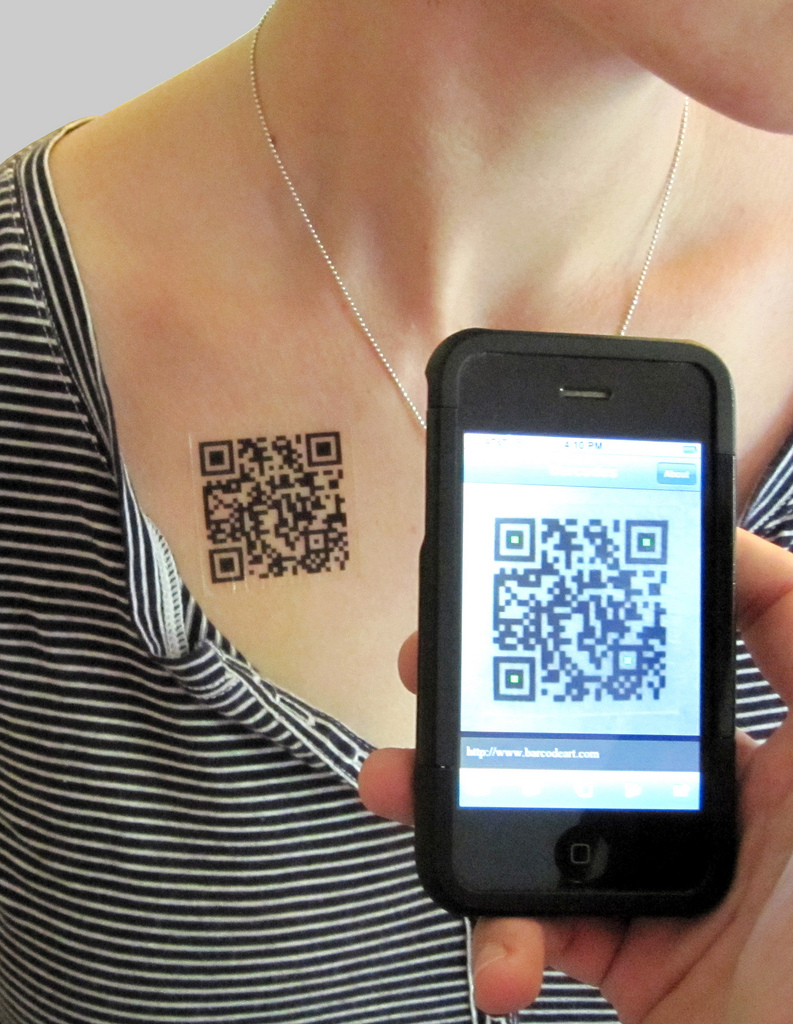
QR-codes are multi-dimensional barcodes that can be read by barcode scanner applications (such as Google Goggles) that are available on most newer smartphones or that can be downloaded. The great potential? URLs can be embedded into QR Codes, for free and in less than 60 seconds! QR Codes, also referred to as paper-based hyperlinks, tie real-world objects to online content and can be located anywhere–on receipts, signs, advertisements, business cards, products, even Times Square–the list goes on.

QR stands for “quick response,” so that when a person comes across one, he or she can scan the barcode with his or her phone and be linked to more information through just a click of a button. For more information, SearchEngineLand lists a number of QR codes generators, readers, uses and over 15 organizations who have used QR codes including The Nonprofit Technology Network (NTEN). NTEN used QR codes to conduct a scavenger hunt at the recent NTEN conference.

Additional examples of QR Codes making a low cost, impact:

  • Be the One–Save the Gulf Campaign: QR Codes were used to direct people to the campaign’s video and to sign the campaign’s petition.
  • The RememberMe’s Collaborative Art Project: OxFam and TOTeM supported, this project uses QR Codes on used clothing that point to audio-based stories of where the clothing originated.
  • Starbucks and Project Red: According to Joe Waters, Starbucks and Project Red are using QR codes on Starbuck’s mugs to engage people further in Project Red–highlighting the benefits of the program and engaging others in advocating for it. To me, this one is interesting as it highlights the linear model of viral sharing (one to one vs. one to many or many to many).

Before we get too excited, there are still questions I would love to have us answer:

  • Do people actually use QR codes?
  • How much time do people spend reading/scanning the information accessed through a QR code?
  • What audience groups are most likely to engage in QR codes?
  • What’s the ROI from some of the organizations using QR codes? The examples shared show the quick, easy and neat aspects of the technology. It would be great to see follow-up posts about the results achieved.

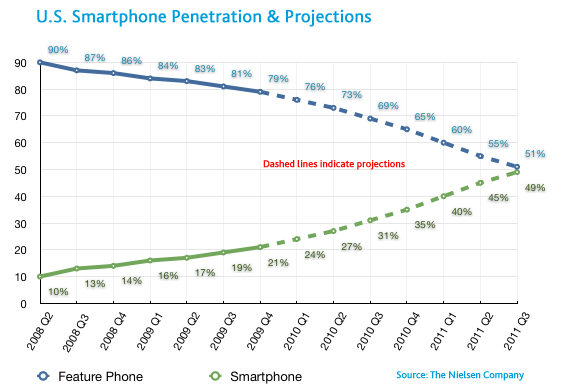
With Smartphones having a 21% share of American subscribers, you may want to think twice about if a QR Code program is right for you. However, with Nielsen predicting that 1 in 2 Americans will have a Smartphone by the end of 2011, the potential for high impact is there.
And for now, that may be all you need to know. If you are going about a QR Code program or know of research around these types of programs, please share it with us in the comments. Otherwise, what questions do you have around QR Codes? What am I missing?

flickr credit for photo: scott_bl8ke

The Rise of OpenGood

socialgood-dayIn honor of #SocialGood Day, I wrote a post for the IQ Solutions blog reflecting on the TEDxChange event and calling for #OpenGood.  (Disclosure: IQ Solutions is my employer.) Since posting, a number of things have happened that echo the themes from TEDxChange and this concept–giving cause that perhaps #OpenGood is more of a reality than an ideal. For instance:

Read more about what I mean by #OpenGood. At the very least, remember this: If we don’t start with asking “What if?” how do we get to “What next?”

*****

What others signs have you seen or read that may indicate the rise of #OpenGood?

Where You Place Your Time and Attention Changes You

There’s a new Twitter in town. With new functionality, a new look and feel and lots of new chatter about the future of Twitter and online communications. Maybe you were a part of the live press conference? Or maybe you stopped everything you were doing to follow along?

This is fine. But I can’t help but offer up a thought…  What if we paid as much attention to:

Following Twitter’s news has a place in our life–but there are so many different aspects to life outside of the Internet and technology. I feel it’s okay to follow the hype–but let’s not get caught up in it. I say this as much as a reminder to myself, as I do to my fellow bloggers and readers. Where we place our time and attention, influences our thoughts. And our thoughts can become our actions.

“Watch your thoughts, for they become words. Watch your words, for they become actions. Watch your actions, for they become habits. Watch your habits, for they become your character. Watch your character, for it becomes your destiny.”

So I ask you: What are your thoughts?

Facing Social Change at the Dinner Table

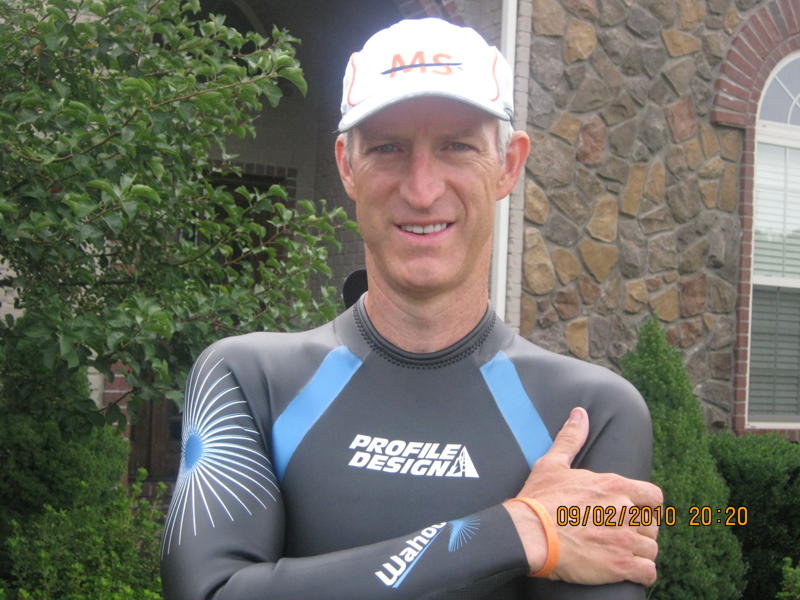
My dad, Scott Rampy, is a free agent advocate, activist, and fundraiser working to end multiple sclerosis. He’s also humble. So he doesn’t say it in his post, but in one year, with two events, no budget, and a handful of volunteers, my dad spearheaded the effort to raise over $250k for the National MS Society–and that was just in his spare time. Below, read about his latest effort in working to crush MS and where he finds his inspiration. Reading the post and typing this intro, I have tears in my eyes. Our family’s fight is real. It’s personal. And it’s persistent.

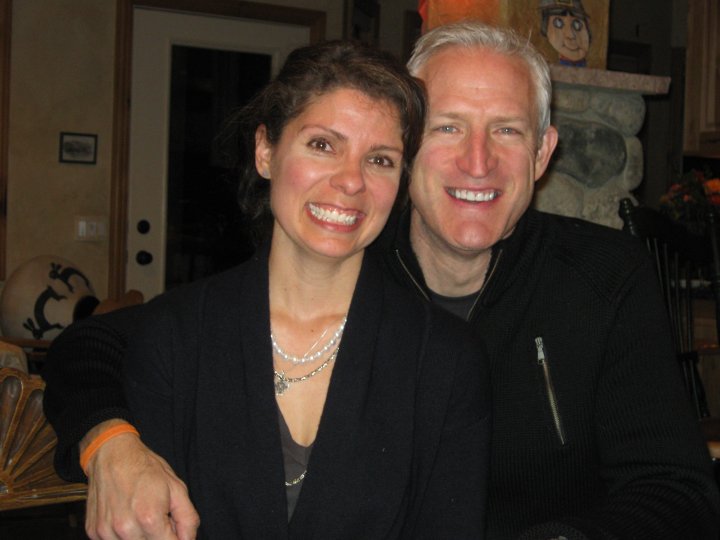
By Scott Rampy:  The word “social change” for me is intimidating.  It implies that there has to be an attempt to resolve a social injustice, shortcoming or reversal of public opinion.  For me, social change can be as simple as the inspiration that sits across from you at the dinner table.  In my case that is Jo Rampy, my wife of 26 years.  From a pure grass roots perspective, social change can be motivated by inspiration to inform others in an effort to spark a movement in a small way to solve a larger problem.

This is the case with the National MS Society.  Multiple Sclerosis (aka many scars) affects nearly 400,000 people in the country and selfishly I’m focused on the one person, Jo, who deals with it everyday.  She has been diagnosed with this disease for the past 7 years.  MS attacks the myelin that surrounds our nerve endings in the brain that control our central nervous system.  The damaged myelin forms areas of “sclerosis scars” that over time, affects ones ability to talk, see, feel, walk and concentrate.

Jo has been an athlete since the first day I met her, as she was running stadium stairs when I first noticed her.  Since the diagnosis, she has maintained an active lifestyle just trading her running shoes to walking shoes.  Jo walks 30-35 miles a week and regularly engages in health education to learn how to manage and live with MS.  As a result of her commitment, I’ve taken the challenge to SWIM, BIKE and RUN so that someday people with MS can again.

For the past several months, I have been training for my first half iron-man in Branson, MO Sept. 19. This race is not only a tribute to the endurance and strength I observe in Jo everyday but a tribute to people that deal with MS on a daily basis… so I SWIM, I BIKE and I RUN so that they can again.

There is no cure for MS, but my goal is raise money so the research can continue to find a cure in our lifetime.  My call to action is to have you join our cause and if motivated, donate $70–a dollar for each of the 70.2 miles traveled in my race.  A half iron-man consists of a 1.2-mile swim, a 56-mile bike ride and a 13.1-mile run.  At the writing of this post, we have raised $2,100 and have 106 members supporting the cause.

Please join, invite or donate and support a cause that will make a difference for someone dealing with MS.

From Awareness to Action: Using Pledges and Triggers to Make It StickK

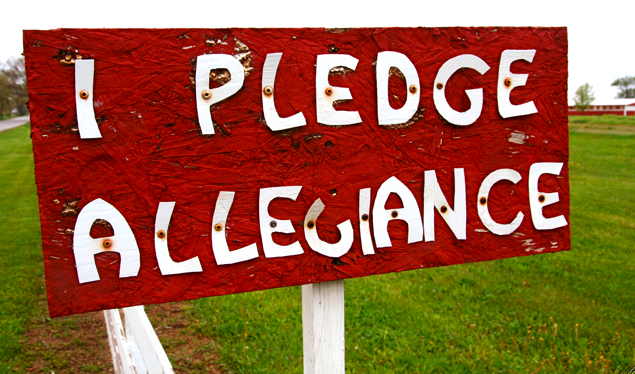
Have you ever forgotten to do something? You’re not alone. This is why to-do lists are so handy–they remind us of the tasks we need to complete. Going through my own mental to-do list on my walk home today, I came across something to add to the list. A poster ad that asked me to “pledge to be car free on Car Free Day September 22.” Let’s walk through this:

Moving Through the Stages of Change

Before seeing the ad, I did not know about with Car Free Day, so the ad helped me become aware of the day. The ask was clear: Pledge to go car free and actually go car free on Sept. 22. Enter my dilemma. At that moment, I wanted to pledge, but I couldn’t take an immediate action except to add it to my already long to-do list. Imagine a different scenario…

What if, instead of just asking me to pledge, the ad encouraged me to pledge, on the spot, by sending a text message using shortcode as the way to officially make a pledge. And then, by pledging, what if I was also able to get a reminder on Sept. 21 that I had pledged to go car free or opt-in to receive tips, promotions and specials from participating partners? And then what if on the 22nd, I received another text in the morning letting me know of the total number of people who made the same pledge I did. To go even another step, what is on Sept. 23, I got a text letting me know of the collective impact my pledge helped create, and asking me if I wanted to opt-in for a reminder to participate in Car Free Day 2011. This would make the desired behavior: easy to accomplish, fun to do and more popular.

Activate the Trigger: Pledges and Reminders

Lately, I’ve had a soft spot for the act of committing to follow-through on a certain, suggested behavior. This is because–in order for someone to go from the preparation stage of change to the action phase–they first need to make a commitment to do so.

Now, I realize commitment can mean different things to different people (just look at reality TV). This is why it’s important to understand the audience you are wanting to reach and the desired action and behavior you want them to take. For the Car Free Day example, I wanted to commit, and I can. But I know, that fitting something like that into my daily to-dos and priorities is hard despite my good intentions. However, I know if I got a reminder the night before, I would be more apt to follow-through. In short, a reminder would trigger the action I pledged to make.

Making It stickK

At the CDC conference earlier this month, a panel discussed the role of behavior economists in public health. They touched on a variety of applicable concepts to our work–one of them being the role of triggers in behavior change. In the case of Car Free Day, reminders can serve as a trigger to the action. As another example, the CDC panel highlighted stickK.com. Users of stickK.com sign a “commitment contract” where they agree to achieve a certain goal and uses various triggers (reminders, personal support networks, and monetary incentives) to help people take and maintain action.

For the behaviors you want people to make, how can you help them go from good intentions to good follow through? Help them make a commitment and leverage triggers to make it easy, fun and popular for the behavior change to occur.

flickr credit: stevendepolo

Defining Sustainable Social Change

If there’s one word that deserves to be on the “Top Words of 2010” list, it’s the word sustainable. It seems to have an aura around it as we all work to define exactly: What is sustainable social change?

There are lots of opinions about the word. And, I’ve discovered that the word means different things to different people. The environment folks read it one way, nonprofiteers another and you have a whole other group transforming it into social innovation, social capitalism and/or social entrepreneurship.

What is clear: Is that we’re all pretty social about it. But in all seriousness, I don’t yet have a clear, simple, 140-character answer. But, I have do have some places that I go to help me refine my own thinking around sustainable social change:

B Lab, B Corporations and Social Business

In April 2010, Maryland was the first state to sign Benefit Corporation legislation, followed shortly by Vermont. This legislation was heavily lobbied by B Lab, a non-profit group that rallies businesses to serve more than a bottom line. To improve society and address a number of our problems, my mind had been circling back to influencing and impacting systems, ecosystems and networks. In others words, my interest in creating and growing sustainable business continues to increase. Sometimes for change to happen, there needs to be a change in what’s possible and accessible.

I’m all about nonprofit efforts, volunteering, fundraising, helping others lead healthier lives and improving quality of life–but at some point, for our work to have a lasting impact and a legacy for the next generation, it must be sustainable. Liz Forkin Bohannon, my friend and sustainable business leader at Sseko Designs, asks some poignant questions in one of her latest posts–talking about the impact of free, donated secondhand clothing in Africa and its impact on the local economies. This is just one example of how doing good may be doing more harm. Why do I bring this up? Because sustainability is at the forefront of her argument.

Social Entrepreneurship

A close cousin to the social business discussion is social entrepreneurship. I learned in recent months that Georgetown University and the great Bill Novelli are working on creating Georgetown’s own Center for Social Entrepreneurship. Both Harvard and INSEAD even have their own social entrepreneurship initiatives. This isn’t about coincidence. It’s about the need for sustainability.

When talking about social entrepreneurship, the immediate go-to resource in my head is Social Edge. Social Edge is an amazing resource that isn’t afraid to dive into the nitty gritty, as well as the large scale and impact of social entrepreneurship. Written by social entrepreneurs and for social entrepreneurs, it seems that sustainability is at the heart of many of the topics discussed there. Just this week, Social Edge tackled the definition of a “social business” leaving more questions than answers. For me, that’s my kind of resource. It shows thinking, it shows engagement and it also tells me that we have our work cut out for us.

Sustainable Behavior

In the social marketing arena, renowned social marketer Doug McKenzie-Mohr recently announced the development of a new peer-reviewed resource: The Journal of Sustainable Behavior. According to the journal’s first call for papers, the “transition to sustainability requires programs to encourage a diverse array of behaviors.” The take away–we social marketers better start to understand sustainability and how it relates to our efforts and our audience.

Social Innovation

Social Edge covers a variety of topics–which together, you could say the theme is social innovation. But what does this phrase mean and how does it relate to all the other players on the field? According to the Hub, social innovation “refers to new ideas that resolve existing social, cultural, economic and environmental challenges for the benefit of people and planet. Even more simply, a social innovation is an idea that works for the public good.” Well, non-profits work for social good. So do some government agencies. So, who is responsible for social innovation and what will its outcomes look like? Even Stanford has its own Center for Social Innovation. According to its website, its purpose is to “build and strengthen the capacity of individuals and organizations to develop innovative solutions to social problems.”

To me, sustainability is seen here again. Perhaps—sustainability is what connects the dots between these movements. Perhaps, our answers lies in the spaces between the words and in the thoughts between our actions.

Social Capital Markets

Ever heard of SOCAP? Well, SOCAP stands for the social capital markets conference and SOCAP ’10 represents the third year of the conference and will be held Oct. 4-6 in San Francisco. According to the website, SOCAP ’10 is the “largest interdisciplinary gathering of individuals and institutions at the intersection of money and meaning.” SOCAP ’10 will seek to answer the question: What next? (See–there’s something about asking questions…) What’s next for the social capital markets–the social entrepreneurs, the social business wanna-bes, the social innovators, impact investors and social marketers?

Might I dare suggest that sustainability–and figuring out how to develop it, fund it, seed it, and maintain it–might be part of the answer?

flickr credit: Garry

Quote of the Week: Are We Ever Done Working?

I was out at dinner tonight and overheard another table. Maybe you’ve heard something similar before. It goes something like this, “He made how much? from that? If only I’d thought of that, I could cash out. Call it a day and be done.” The truth is though, we are never done. I mean really, what is done?

So, as you wrap up your week, ask yourself: What am I working for? Are you working for retirement or are you working with a purpose? Clayton Christensen, over at the Harvard Business Review, offers some great insight into work, meaning and our purpose in life. In his words:

For me, having a clear purpose in my life has been essential. But it was something I had to think long and hard about before I understood it. When I was a Rhodes scholar, I was in a very demanding academic program, trying to cram an extra year’s worth of work into my time at Oxford. I decided to spend an hour every night reading, thinking, and praying about why God put me on this earth. That was a very challenging commitment to keep, because every hour I spent doing that, I wasn’t studying applied econometrics. I was conflicted about whether I could really afford to take that time away from my studies, but I stuck with it—and ultimately figured out the purpose of my life.

Had I instead spent that hour each day learning the latest techniques for mastering the problems of auto correlation in regression analysis, I would have badly misspent my life. I apply the tools of econometrics a few times a year, but I apply my knowledge of the purpose of my life every day. It’s the single most useful thing I’ve ever learned.

Working with a purpose–no matter what that purpose is–whether it be to put dinner on the table, to provide opportunity for your family to doing what you love, matters. And we are never done. Call it an end-of-the-week rant, but what do you think–are we ever done working?

flickr credit: markbarky

PS: Christensen’s HBR article is quite possibly the best article I’ve read to date. It’s worth the read.

CDC Asks You to Name That Blog

You may have noticed a fun new badge on the bottom right of SocialButterfly. This badge links to CDC’s recently launched “Gateway to Health Communication and Social Marketing.” This gateway acts as a feeding ground for those looking for resources, tools, templates, case studies and answers to all their questions about social marketing and more. At the very least, it’s a starting point.

Part of this new land is a new CDC  Blog–and guess what–you can be the one to name it! Though, CDC isn’t the only one with a new blog on the market. Ogilvy PR recently launched their Social Marketing ExChange as well (and started an office in Atlanta–as did AED…). I know I’m not alone when I jump up and down at these new steps in bringing social marketing to bear. Maybe one day, with organizations with this type of umph and leadership behind us, social marketing will be a household name. Or, at the least, recognize-able as a profession.

So, what would you name the new CDC blog? Here are some thoughts off the top of my head:

  • Push and Pull: Not only does social marketing combine a number push and pull strategies and tactics, but the blog can also serve as a forum for health communicators and social marketeers to debate, discuss, share and “push and pull” insight and information amongst one another.
  • Influence Health: This is action oriented and speaks to behavior change, but also to the impact and influence social marketing and health communications can have. Influence health could be interchanged with a name like Impact Health or Improve Health as well.
  • The Power of Health. This is what we believe in–if we improve health, we improve quality of life, and therein, increase happiness (in sum).
  • Speaking of Health. I didn’t come up with this…someone who already commented over at CDC did, but I like it too. I feel it’s catchy, frames the conversation for health, is action-oriented and can umbrella a number of topics.

What do you think? What would you name it and why?

PS: For a listing of additional blogs, UNC’s School of Public Health has a strong listing of health blogs, and I have a long list of social marketing specific blogs as well.

Is Public Health a Competition?

The NY Times recently published an article titled, “Tobacco Funds Shrink as Obesity Fight Intensifies,” pitting anti-smoking public health folks against anti-obesity public health folks. The NY Times asked us, in short: Should we focus on addressing obesity over anti-smoking efforts? Is this the right thing?

David Katz, Director of Yale University’s Prevention Research Center, published a response via the Huffington Post to examine the “this vs. that” and “right vs. wrong” approach the NY Times took–and asked another question: What choice are we really making?

Now, this is an important one. The NY Times article does do a great job in bringing up the debate: What are our nation’s health priorities? Katz brings up a second good point: How do you divvy resources amongst these health priorities to get the most juice from the squeeze (so to speak)?

First–> Disclaimer–In the words of Katz, I too, am not prepared to answer the NY Times’ question of this or that because I don’t fully know–but then, who does? That said, I have two additions to Katz’s suggestions:

1.  Katz first suggests “conduct modeling exercises to determine what general allocation of research and policy dollars — across an array of conditions, behaviors, and even types of research — would most improve our health over a defined period of time.

To this, I say, that we all need to get more involved and clued into the Healthy People 2020 initiative that is run by the U.S. Department of Health and Human Services (disclaimer:  This project lies within  a client of my employer that I work on). This is a collaborative, science-based approach to setting 10-year national health objectives to promote health and prevent disease. So, when we are talking “this or that” or about our Nation’s health priorities, Healthy People 2020 is a good start. (Stay tuned, in December the Healthy People 2020 objectives will be released along with guidance for achieving the new 10-year targets).

2. Secondly, Katz suggests that we need to be more “holistic.” Going on to say, “A healthy person is healthy…Recent studies have shown that people who don’t smoke, eat well, are active and control their weight are roughly 80 percent less likely to get ANY major chronic disease than their counterparts who do the converse in each case…So, a healthy person doesn’t smoke. A healthy person eats well. A healthy person is physically active.

I couldn’t agree more and this is why–I don’t feel it needs to be an either-or type of situation. It can be all the above. Healthy living (aka living a healthy lifestyle) can be defined by a number of behaviors such as:

  • Not smoking
  • Eating Right
  • Being active

One could argue that other behaviors could be umbrella-ed into healthy living such as getting immunizations or getting preventive screenings. Thus, the message could not just be anti-smoking or anti-obesity, but instead, be about promoting a health lifestyle which encompasses a set number of behaviors. This should be our focus. Thus, I leave you with the same question Katz asks at the conclusion of his Huffington Post article:

What interventions for individuals, families, schools, worksites, communities and more will encourage, promote and empower the adoption and maintenance not of some single preventive strategy, but of healthful living?

flickr credit: lets.book

The Story of a Church Making the Impossible, Possible

I wrote this post about a year ago and just re-discovered it this past weekend while doing some blog maintenance and wondered–why did I never post this? This is good stuff!

Yes, in the title, I said the church. I debated sharing this case study because I was afraid people might not read it because it says church. But then I thought, some just might read it because it does say church.

The focus in this post, however, is not the “church.” It’s about a creative, integrated strategy that utilizes a social marketing approach to achieve to strengthen America’s concept of love in the union of marriage. This love is admittedly, from the perspective of the Church, but don’t we always have the question in social marketing of – who decides? (That dear friends is another ethical conversation that can range to anything from paternalism to essentialism and everything in between.)

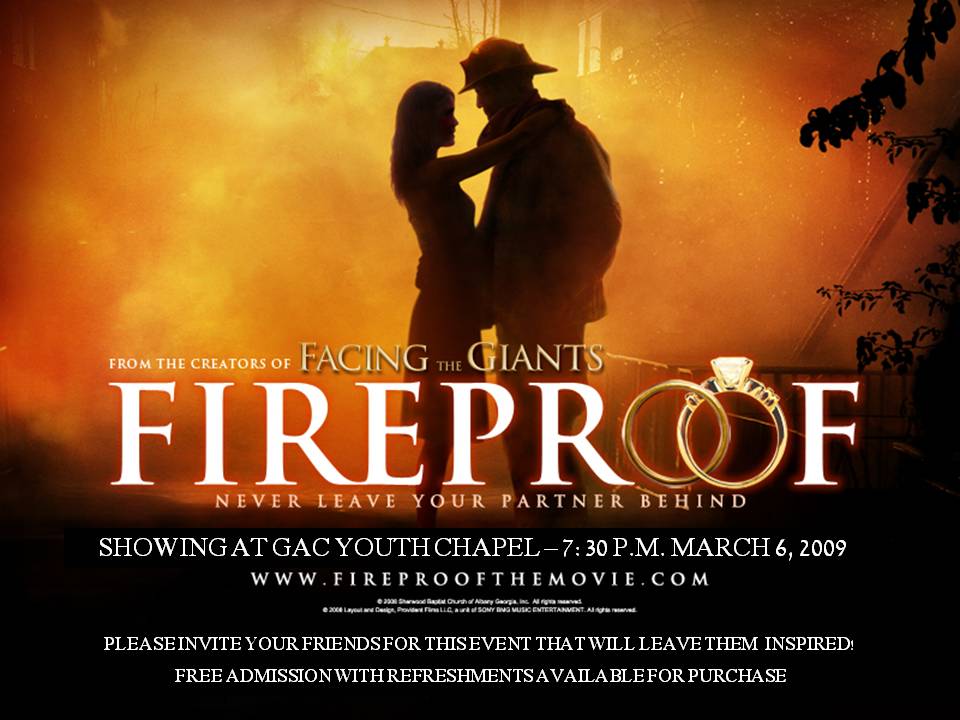
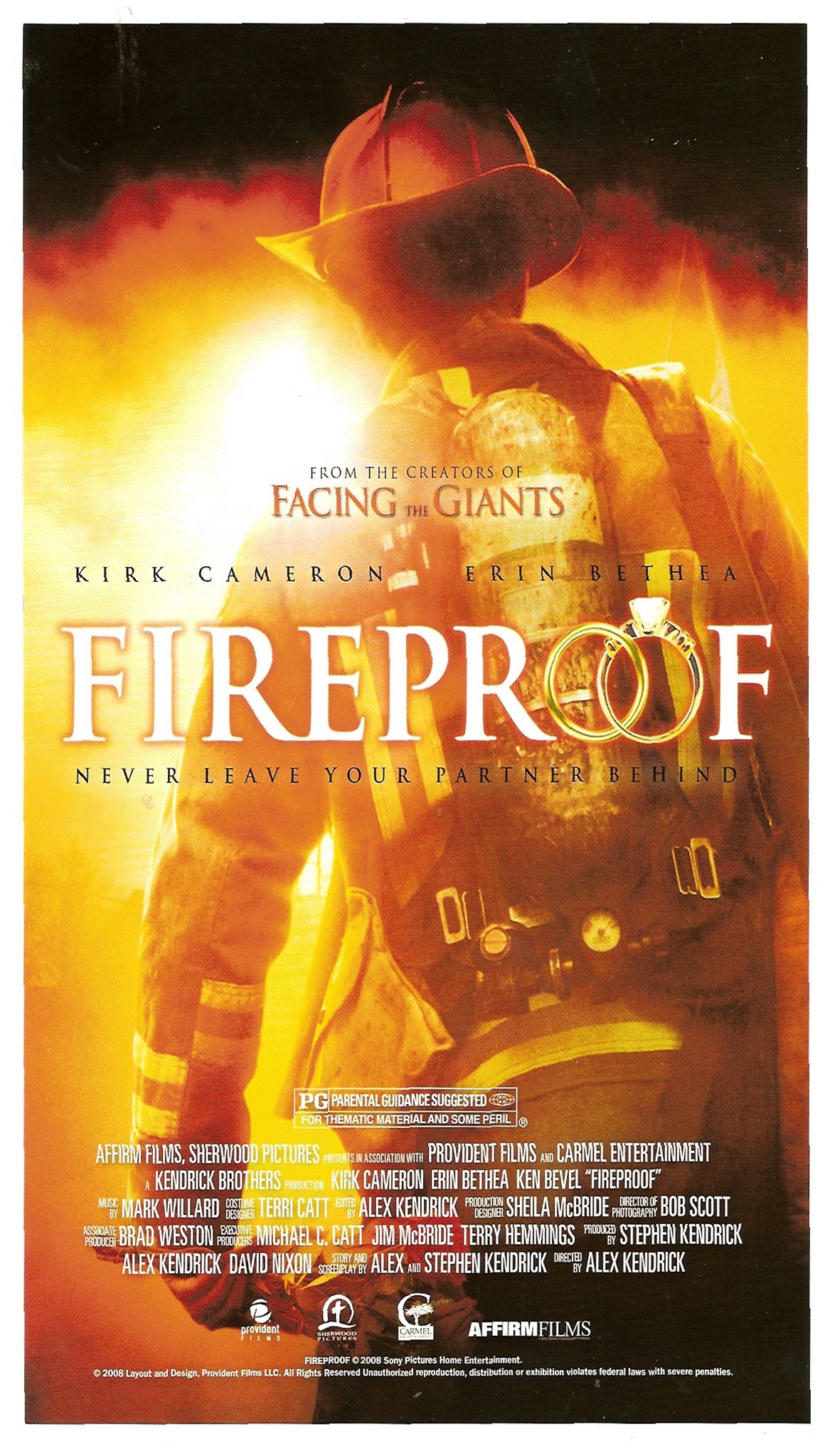
Onward. Have you taken the Love Dare? Is your marriage Fireproof? In the social marketing realm, there’s been talk about providing tools that equip and empower individuals to not only make personal behavior change but to help evangelize behavior change in their communities and networks. Let me walk you through a movement started at a church in Georgia.

httpv://www.youtube.com/watch?v=M5lSu6GkC2k

Sherwood Baptist Church created Sherwood Pictures, a volunteer-driven moviemaking ministry in Georgia. This movie studio was created from within its congregation and uses volunteers to act, produce, film and market their movies. Sony caught on and premiered these movies across the United States in movie theaters everywhere. The movie studio’s goal is to harness the influential power of Hollywood to influence behavior change: adopting Christ as one’s God, while also working to address societal issues. Their first two movies were Flywheel, followed by Facing the Giants. Facing the Giants was a surprise hit and was the best-selling resource in Christian stores in 2007.

A Lesson from the Church on Social Marketing

Building on this momentum, their latest movie, Fireproof, went above and beyond the work that even Call+Response or Invisible Children have propelled. Not in terms of raising “awareness,” but due to the plethora of TOOLS the Fireproof movement has around it. First, Fireproof has a few interwoven objectives (according to the makers of the film):

  1. Show what real love is.
  2. Show how this love is integral for a successful marriage that is Fireproof against today’s high divorce rates.
  3. Show how families are a foundation of today’s society that should be nurtured.

I’m not here to debate whether you agree or disagree with the message behind the movie. But look at the TOOLS! These tools help someone commit to changing, take action to change and help them maintain that behavior over time while also encouraging others. What can this teach us about how to provide tools for people to address their health? Not just relationship health, but environmental health, public safety health, civil health, etc.

  • A national launch fueled through grassroots evangelists for “premiere night” with watch parties through already-built church networks.
  • Fireproof DVD and movie at a low price (about $8).
  • At purchase, you can opt-in: 1) their email list survey, their feedback survey, or for their ambassadors survey, where you can get involved in the MOVEMENT for healthy marriages.
  • Download and/or purchase an educational curriculum. This curriculum can be utilized in churches, small groups and/or between individuals to assist in marriage preparation classes or for sermon series.
  • Step-by-step DVD to assist in nurturing healthy discussion about the topics presented in the movie.
  • Because the movie is centered on a concept called, “The Love Dare,” which is a 40-day challenge to love your spouse. The producers of the movie actually wrote a hard copy of the “The Love Dare,” so that any couple can walk through the same process the actors in the movie did to nurture their relationship and/or marriage.
  • And, if you don’t have a way to view the movie, the movie “Fireproof” was also developed into a book for those that prefer reading to video.

As for promotion? It all started with Facing the Giants. A Christian movie produced by a church in Atlanta all by volunteers within the congregation that premiered through Sony in movie theaters across America. Congregations rallied around the movie and its purpose–here again, with Fireproof, people did the same. Couples, churches, communities, businesses, firefighters, and the Catholic community all pitched in to help promote the movement. In addition, any consumer who bought the materials online, could also opt-in to be an ambassador of the movement to arrange get togethers, watch parties and more around the central themes in the movie.

What This Means…

Let’s remember where this all started…at a church, by a group of volunteers wanting to a) show the power and love of God and 2) work to address societal issues in a big way. In other words–they started with their goals. They didn’t see barriers. They didn’t stop at possible. They saw the impossible and made it happen.

What does impossible look like to you? Make it possible.

PS: Interested in Christian churches who are creating a movie-making ministry? In McClean, Virginia, McLean Bible Church has a group of congregation members working to create a Christian movie studio, named In Jesus’ Name Productions. Their first movie, The Messiah, has a $75 million dollar budget and is due out 2012.