Author Archives: Alex

3 of the Latest Reasons Why I Love Twitter

Ok. I’m joining the bandwagon of bloggers who are posting their love for Twitter.
Twitter

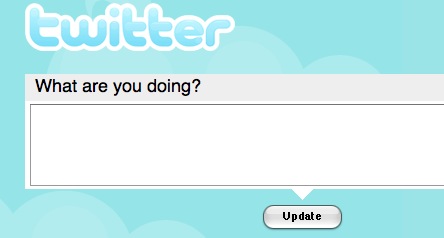
Twitter is a micro-blogging social media site that asks the question, “What are you doing?” Users who have logged in and registered for the free service can then answer the question within 140 characters or within multiple updates. Twitter works by people agreeing to ‘follow’ a certain Twitter account. Once following this account, the person then gets the account’s updates.

Users

Twitter also seems to be used by an older demographic according to Quantcast.com, with 24% of its users being between the age of 25-34, followed by 22% of users being 35-44, with 69% having a college education or higher.

Currently, the use of Twitter is greater outside of the United States according to the makers of Twitter. See graph below.

Your browser may not support display of this image.

One advantage to Twitter is that it is gaining in its popularity and recognition of its advances into mobile technology as Twitter has applications for cellphones, PDAs, and with other social media such as blogs, social networking sites and instant messenger, many of which, are free.

Twitter Case Studies

@womenshealth and @Health provide Tweets providing information and health tips that link to their home page. For more case studies that highlight the extent of health uses for Twitter, see Nedra Weinreich’s great post, Twitter for Health.

Thus, here are my top 3, latest and greatest reasons why I love Twitter.

1. Get to know the “day in the life” of CEOs who tweet

As more companies create a Twitter account, @zappos, @Jetblue, @southwest, etc….not only do I enjoy the frequent competitions to give out giveaways to Twitter followers…but you get to know the everyday happenings of those with some pretty cool jobs.

From my observation, the company’s Twitter account is run by the CEO, President or another higher up. As this person updates their tweets, it shows me more about what goes on in the lives of those with great responsibility….something you can’t get any other way, even in a blog.

2. There’s so much Potential

Twitter is constantly expanding. Almost everyday I’m seeing a new use for Twitter or a new Twitter application. Just scanning the Twitter Wiki, there are over 50 cool Twitter applications for Twitter metrics, Twitter mobile applications, multi-platform apps, SecondLife Twitter apps, Twitter for Mac apps, Twitter for Windows apps…. It’s just amazing. And, this is only the beginning.

3. It never gets boring

Twitter and the Twitosphere never gets boring. Twitter, in its natures, Inspires creativity and innovation with what can you do with 140 characters…here are some of the uses I’ve found:

  • Linking to recent blog posts
  • Twittfeed acting as an automatic feed for your blog
  • Linking to favorite news articles
  • Creating a buzz around certain issues to address issues
  • as a fund-raising tool
  • to launch a contest (@zappos told ppl to Twitt their fav. quote to them and the winner would get free shoes!)
  • To meet people in a new area
  • find contacts for new business
  • announce events
  • Twitter questions, tips, facts or ask for help. I.E Question: When did Columbus sail the ocean blue? Help: What blog platform do you recommend?

************************************

So, Join the conversation! =). You can follow me @socialbttrfly

What Coffee Has to Teach Us about Adversity


With the economic hardships–both current and foretold–upon us, the coffee we drink every morning offers up a daily reminder of the hope we can find. The following is an email my mother sent to me, that offers the following challenge: In times of adversity, how do you respond? Are you a carrot? An egg? Or coffee?  I promise, you will never look at a cup of coffee the same way again.


***********

        A young woman went to her mother and told her about her life and how things were so hard for her She did not know how she was going to make it and wanted to give up, She was tired of fighting and struggling. It seemed as one problem was solved, a new one arose.
 
        Her mother took her to the kitchen. She filled three pots with water and placed each on a high fire. Soon the pots came to boil. In the first, she placed carrots; in the second, she  placed eggs; and in the last, she placed ground coffee beans . She let them sit and boil; without saying a word.

         In about twenty minutes she turned off the burners. She fished the carrots out and placed them in a bowl.  She pulled the eggs out and placed them in a bowl. Then she ladled the  coffee out and placed it in a bowl. Turning to her daughter, she asked, “Tell me what you see.”

        “Carrots, eggs, and coffee,” she replied.

         Her mother brought her closer and asked her to feel the carrots. She did and noted that they were soft. The mother then asked the daughter to take an egg and break it. After pulling off the shell, she observed the hard boiled egg. Finally, the mother asked the daughter to sip the coffee. The daughter smiled as she tasted its rich aroma.  The daughter then asked, “What does it mean, mother?”

          Her mother explained that each of these objects had faced the same adversity: boiling water. Each reacted differently. The carrot went in strong, hard, and unrelenting. However, after being subjected to the boiling water, it softened and became weak. The egg had been fragile. Its thin outer shell had protected its liquid interior, but after sitting through the boiling water, its inside became hardened. The  ground coffee beans were unique, however.  After they were in the boiling water, they had changed the water.

          “Which are you?” she asked her daughter. “When adversity knocks on your door, how do you respond? Are you a carrot, an egg or a coffee bean?”

 ***********

Activity.  Think and reflect. In times of adversity? How do you react?

  • Am I the carrot that seems strong, but with pain and adversity do I wilt and become soft and lose my strength?
  • Am I the egg that starts with a malleable heart, but changes  with the heat?  Did I have a fluid spirit,  but after a death, a breakup, a financial hardship or some other trial,  have I become hardened and stiff? Does my shell look the same, but on the inside am I bitter and tough with a stiff  spirit and hardened heart?
  • Or am I like the coffee bean? The bean actually changes the hot  water, the very circumstance that brings the pain. When the water gets hot, it releases the fragrance and flavor.  If you are like the bean, when things are at their worst, you get better and change the situation around you. When the hour is th e darkest and trials are their greatest do you elevate yourself to another level? How do you handle  adversity? Are you a carrot, an egg or a coffee bean?

“May you have enough happiness to make you sweet, enough trials to make you strong, enough sorrow to keep you human and enough hope to make you happy. The happiest of people don’t necessarily have the best of everything; they just make the most of everything that comes along their way.”

Liked what you read? Feel free to share with others: Bookmark and Share

Social Marketing vs. Social Change Marketing

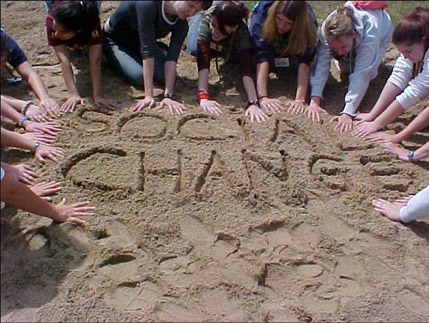
In an earlier post, I clarified how social marketing differentiates itself from social media marketing. Now, I am asking for your thoughts on how the term social marketing relates to the term social change marketing.

social change


Social marketing, as we’ve discussed, has decades of theoretical history and practice. It is a term constantly evolving and defining itself. However, the field also faces a challenge: branding itself…especially since the onset of social media marketing.

Reading through social marketing texts and journals, the terms – social change, marketing for social change, and social change marketing are making increasing appearances, so I am curious on others’ thought about how the two terms relate.

A good summary of the two concepts, including how they relate to commercial marketing, is found in Dr. Stephen Dann’s slideshow titled:

“Social change marketing in the age of direct benefit marketing – where to from here?”

In this presentation, Dann asks the question: Where to from here? which provides information on how social marketing has grown and compares to commercial marketing and what this may mean for the future. Other signs of the concept of social change’s relationship to social marketing dates back to Prof. Alan Andreason’s book: Marketing Social Change. So, there is a history. On the web, Craig Lefebvre’s blog is titled On Social Marketing and Social Change, suggesting the relationship.

Thus, I am curious on your thoughts about the terms/concepts of social marketing versus social change marketing:

  • Can social marketing be renamed social change marketing?
  • Or, is social marketing one component of social change?
  • Or, is social marketing one piece of social change marketing? What’s the difference? Is there a difference?

It may seem like a matter of scrabble to some, but these discussions really engage me, and I hope the enthusiasm sparks interest as I think the relationship between the two terms is continuing to develop and will becoming increasingly important as we work to brand social marketing. =)

A Little Known Idea for Evaluation: User Interface Test

…does the concept User Interface ring a bell? What a User-Interface test?

As I hinted to in my last post, I think the evaluation step is maybe one of the most important steps a marketing plan can include, yet many lack. Doing evaluation, allows one to:

  • Reflect on the strengths of the campaigns
  • Document the process so there’s no reinventing the wheel for next time
  • Identify areas for improvement
  • Lets you gain and track client feedback
  • Find ‘lessons to learn from’
  • Calculate ROI and compare to previous years/cases

For best evaluation results, one should meet with a team, get outside feedback, talk to the client(s), key associates or other employees who had a hand in the project. Now, it the fun part. I want to introduce to you a great, but commonly unknown tool to add to your evaluation methods: the User Interface Test.

User Interface is a concept that describes how users interact with a website. If you’ve ever had any of the following questions, then conducting a User Interface test might be right up your alley:

  1. What should be on the homepage?
  2. Should the main graphic be video, a slideshow, a moving graphic, etc.?
  3. Where should the ‘search’ button go?
  4. Is our website easy to use?
  5. How functional is our website?
  6. What’s the message our users are getting?
  7. What would make our website easier to use?
  8. When someone first comes to our site, what’s the first thing they see?
  9. What would get users to spend more time on our pages?
  10. Does everything on our site communicate our message?
  11. Does our content engage the reader?
  12. What is someone expecting when they come to our site?
  13. Is the site easy to use?
  14. Is our site customize-able?
  15. Does our site have a professional tone? or an appropriate tone?
  16. Does our site speak relevance to those trafficking the site?
  17. Does the design capture attention?
  18. How do our users interact with our site?

If you find yourselves asking these questions and similar others, then a User Interface test could be right up your alley! To test your User Interface, you can use either quantitative or qualitative approaches. Four qualitative approaches are outlined below.

  1. Time to Task: Tests ability for tester to complete an action to user’s satisfaction in a decent time.
  2. Accuracy: Tests the accuracy of the website and the information found.
  3. Emotional Response: Tests how the testee responds to their overall experience on the site or in conducting their tasks.
  4. Recall/Repetition: Tests ability to recall the process it takes to find desired information. Also looks as how the testee’s ability to recall where he or she is on the website and how he or she arrived there.

To create quantitative results, one can have testee fill out forms measuring various categories on a scale of 1-5 (customization, professionalism or tone, design, organization, usefulness, relevance, and interactivity.)

Hope this little research tidbit, and way of evaluating your website comes in hand.

Get to Know Your Neighbor: Beth Kanter

Continuing my weekly “Blogger Neighborhood Series” and in honor of the great Mr. Rogers, who called us to “Get to know our neighbor,” Beth Kanter over at Beth’s Blog is the second neighbor featured in this series.

Blog Name: Beth’s Blog

Blog Topics: How nonprofits can use social media

About the Author:

Beth Kanter is a trainer, blogger, and consultant to nonprofits and individuals in effective use of social media. Her expertise is how to use new web tools (blogging, tagging, wikis, photo sharing, video blogging, screencasting, social networking sites, and virtual worlds, etc) to support nonprofits. She has worked on projects that include: training, curriculum development, research and evaluation. She is an experienced coach to “digital immigrants” in the personal mastery of these tools. She is a professional blogger and writes about the use of social media tools in the nonprofit sector for social change. (Borrowed from Kanter’s blog. For more information, click here.)

If you could live on any street, what would that street be named and why?

Learning and Reflection Street – it would be a street where you can take time to learn and reflect any what you curious about

Who would be your dream real-life neighbor?

Someone who understood reciprocity and wasn’t intrusive

Why do you blog?
I started blogging because I am a trainer and writer and wanted a place to write, so I could remember or figure out how to use technology tools. My blog is my journal – I’ve always kept a journal – but the difference is that everyone reads it.

What inspires you to blog?

When I’m trying to learn something new.

If you customized your own license plate, what would it say and why?

I don’t think I’d want to customized license plate ….

What’s your favorite blog post and why?

A colleague asked for advice. I wanted to get other people to participate, but it was sensitive so I created a simulation – a funny one.

See the link below to see how Beth combined creativty and humor to ask a very important question about how to react to potential online criticism towards your non-profit, company or organization. —> http://beth.typepad.com/beths_blog/2008/02/transparency-so.html

What’s currently your favorite social media application our blogger community should utilize more?

That’s hard. But I’ve been enjoying Twitter of late. (You can follow Beth on Twitter @kanter)

Now, here’s a question for YOU: How has Beth Kanter’s work influenced you or your community?

****************************************

This continuous weekly series highlights different blogs and their respective bloggers in the blogosphere neighborhood. Following the great Mr. Rogers, who tells us to ‘Get to know your neighbor,’ this series introduces us to our blogger neighbors, making for a more unified, collaborative voice for the social sector. Like to nominate someone or be featured yourself? Contact me @ socialbutterfly4change@gmail.com.

Is everything marketing?

The other day I was having a conversation and someone made the remark that “Some people think everything is marketing!” This, as usual, got my brain thinking…..is everything marketing?

Backing up, you have to have a clear understanding of what marketing is and what marketing is not to make such a judgment. The American Marketing Association defines marketing as:

“Marketing is an organizational function and a set of process for creating, communicating and delivering value to customers and for managing customer relationships in ways that benefit the organization and its stakeholders.”

Now, let’s say you get that definition…and lets even go as far to say that you have some marketing experience and academic marketing background…is everything marketing?

What if you have none of these…what’s your perspective? What’s your view on marketing then and – is everything marketing?

I ask this question because of one observation I made the other day getting off the metro…

A homeless man stood need the escalator and asked for a quarter. Walking further along, I saw a homeless man sitting, with his cup on the sidewalk as he read a book. And it occurred to me, that the man by the escalator who asked for a quarter is smart – in a marketing way. But, I don’t think many people other metro goers would pick up on this…but this is why I found this man marketing-smart:

  1. Place: He picked a prime location, where people are coming and going, so there is higher traffic and a greater chance that someone would give money
  2. Price: He asked for a specific amount. If someone asks for money, nothing new. But, this was the first time I had heard a man ask for a specific amount, and I wondered if this saw a better return, a strategy so to speak that he had learned from experience.

So, I ask you…is this marketing? I would say yes. Is everything marketing?

From my perspective, because I’m so entrenched in my marketing world, I might say yes (though realistically and in academia, it is a big, no.) But, I would say that everything might be considered…strategic communication. My undergrad major is strategic communications. I think this might be a better way to approach the question…is everything marketing? No, but everything involves strategy.

This question is similar to other statements like…everyone is selling something or everything comes down to sales. I bet some of our corporate friends and corporate agencies would sure feel like its that way! In regards to how the infamous ‘Double-Ds,’ data and dollars, seem to drive many organizations.

(as a disclaimer, I know the dangers of using absolutes like everything, never, always…but I wanted to use it for dramatic purposes….perhaps dare I say, to be strategic?)

What do you think?? Is everything marketing?


Bookmark and Share

Blogger Outreach Series: Law Issues Part B, Privacy

Continuing in my blogger outreach series, this post will focus on law that addresses privacy in regard to bloggers and blog content.

hotoblog

Privacy: Currently, privacy is not included in the bill of rights, but as technology increases, it’s developing into quite the controversy. To protect yourself as a blogger and the subjects included in your posts, it is important to understand the law surrounding online privacy issues and the increasing issues involving privacy

There are 2 ways to approach privacy:

  1. Your privacy as a Blogger AND
  2. the privacy of the people involved in your blog’s content

To protect your privacy as a blogger, there are some different approaches with strengths and benefits. These include:

Blog Completely Anonymously

  • Create a Psuedo-name
  • Do not give away identifiers in the blog’s content
  • For COMPLETE anonymous blogging, try Invisiblog, Tor and Anonymizer. These are applications that help you create an anonymous blog where the creators and hosts of the blog won’t even have access to your information, can hide your IP address, and allows for anonymous editing of your blog.
  • Limit Your Audience
  • To avoid being found in search engines or in Google, install a ‘Robots Text File Generator’ into your blog’s architecture.
  • Set-up an alternative email address.
  • Update from a public computer.

Pros/Cons: Privacy protected. But, if you desire more traffic, hits or views, this could limit you. And, you don’t get credit for your hard work and time into up-keeping your blog.

Blog Anonymously, but control who knows who you are

  • Create an alias…but with talking with friends, family, co-workers, or online contacts, feel free to share that it is your blog. But, you don’t have to put your name on the blog. This allows you to control who can identify the blog as yours, and allows you to control to some degree who knows you have a blog.
  • This is the option this blog SocialButterfly has chosen for a variety of reasons. Eventually, I will more than likely reveal my true identify, but in the meantime, I am collecting feedback on what employers, friends, colleagues think of someone wearing a ‘blogger’ hat.

Pros/Cons: Allows you to get feedback on what others think of your blog and protects your privacy to some degree meaning that random unique visitors can’t identify you without first contacting you and YOU deciding to disclose your identity to them based on your interactions with them.

Blog Openly, but control the type of information visible

  • Put a picture of yourself on the home page, along with a concise bio about your background and why you are blogging.
  • Consider the blog as a way to extend your ‘personal brand.’ So, your communications about yourself need to help build and add credibility to your blog.
  • Allows creator to develop long-term personal connections and relationships with readers.

Pros/Cons: This allows you take full advantage of social media at its best. As a small business owner, it allows to you communicate with possible consumers and to extend your business’ message and purpose and connects consumers to you on a more personal level. Cons include that you are personally identifiable on the web. Anyone can find your blog, know its yours, and may judge you on your blog before meeting you or making a personal connection with you. This could also affect potential employers or current employers.

Blog Completely Openly

  • This is an open, anything goes approach to blogging.

Pros/Cons: Your belief in free speech is rightly communicated and your views are open, honest and shared. However, you may have to provide evidence and reasons why you say what you say. Basically, be prepared to back yourself up. Cons could include potential employers shying away from you, or wanting to fire you because of your blog.

Some more points to remember as a blogger are found here including laws on political speech, unionizing, whistleblowing, blogging when you work for the government, and legal off-duty activities. Blogging about work activities when you work for the government is actually protected under the First Amendment according to the Electronic Frontier Foundation.

Lessons from Privacy for people involved in the blog’s content:

  • If you plan on posting images, videos, or audio of subjects you interview or interact with, gain their consent before posting this material – especially if the material contains minors.
  • Get parental consent if the content relates to minors, and blur the minors face or voice if possible since laws pertaining to minors are much more strict.
  • If you shoot film or take photographs, to be safe, make sure it is done on public property unless you have the participants consent. This will avoid trespassing and invasion of privacy issues.

As blogging increases, it is important to note that many people have different feelings about anonymous-related blogging and the laws continue to change as the technology matures. And as a disclaimer, I reiterate, I am not a lawyer.

For more information on electronic privacy issues, see EPIC, the electronic privacy information center.

**If you are an expert in this area, please contact me as I’d be curious on your thoughts and feedback on this post. Thanks! **

Non-Profit Blog Exchange: Virtual Event

For the Non-Profit Blog Exchange’s 8th Virtual Event, top bloggers in social marketing and non-profit communications are writing posts about each other’s blogs and posts. This is SocialButterfly’s inaugural debut in the Non-Profit Blog Exchange, so insightful feedback is always appreciated.

My blog in focus is Nancy E. Schwartz’ blog Getting Attention. Operating since May 2007, the blog acts ‘as a resource of ideas, tactics and tips for nonprofit communicators.’

Ms. Schwartz is founder of Nancy Schwartz & Company, a marketing and communications firm for non-profits and foundation clients. She also manages her blog Getting Attention and Getting Attention’s e-newsletter.

I had come across Ms. Schwartz’ blog previously when she participated in a round of the Carnival for Non Profit Consultants on Dec. 3, 2007. To be transparent, I am a fan of her blog and the information it provides. The site is easy to navigate, is practical, insightful and offers a variety of content on various topics within the social marketing and non-profit communications world.

I’d like to respond to a specific post of Ms. Schwartz titled: Leverage Prez Hopefuls’ Understanding of Women to Increase Your Nonprofit Marketing Impact. Having just come from a seminar at the Sewall-Belmont House & Museum on Women in Politics, this topic is currently on my mind.

In her post, Ms. Schwartz analyzed the current political debate combined with a New York Times article about how gender influences politics to formulate some non-profit marketing insights on the female target.

Her insights are great and helpful. It’s the premises that catch my attention. Take the first premise: Women vote to protect their interests (men vote because they enjoy politics). However, I know lots of men who are concerned with protecting their interests and just as many women (such as those who gathered at the Women in Politics seminar tonight) who are passionate about politics.

Let’s look at another premise: Women network organically so they already have a network or two in place. One of tonight’s speakers, a Virginia state legislator veteran would also attest, that she learned how to fund raise and garner support from observing the ‘good old boys’ network.

Now don’t get me wrong, I agree and find Ms. Schwartz’ marketing insights on women helpful. I also admire how she took a very popular current event and made it relevant to us non-profiteers. I am just reflecting a lot on women, gender, politics and how they relate. My faithful readers will observe that I am big into concepts and terms and how they relate, ;). It’s the academic in me.

So, in closing, let me leave you with this New York Times article from Feb. 10, 2008 titled: When Women Rule. The author of this article poses the question: Can a woman leader be both liked and perceived as qualified and effective? According to this author and others, a woman leader can either be liked or perceived as competent…but not both. You can see how this ties into the article on female target marketing and women politics.

My thoughts on this were phrased well by Missouri Secretary of State Robin Carnahan tonight at the Sewall-Belmont seminar when Carnahan voiced, with enthusiasm and motivation (paraphrased from memory):

“Is running for a political office hard? Yes. Is it hard for anyone? Yes. Is it harder for women and minorities? Yes. Is it unfair? Yes. But let’s get to the ground running.”

Thus, using Ms. Schwartz’ demonstration of creating relevance from an important topic to us marketers and nonprofiteers….let’s hit the ground running with our social marketing and non-profit communication skills and talents all you fellow SocialButterflies!

…to change lives and the quality of life for all!

Greenwashing: What is it, how do we evaluate it, and what does it mean?

This post provides some answers to these questions and some points to ponder.

First, the term greenwashing is taken from the term whitewashing. Whitewashing means to hide, cover or conceal unpleasant facts or details, especially in a political context or to manipulate. According to the Greenwashing Index, Greenwashing is:

“It’s greenwashing when a company or organization spends more time and money claiming to be “green” through advertising and marketing than actually implementing business practices that minimize environmental impact. It’s whitewashing, but with a green brush.”

Knowing this information, enter in the Greenwashing Index, promoted by EnviroMedia Social Marketing and University of Oregon School of Journalism and Communication. The purpose of the Greenwashing Index is “to educate consumers about how to “read” an ad and encourage them to decide for themselves if what they’re seeing is greenwashing.” The index hopes to curb the growth of greenwashing and encourage real environmental responsibility and change.

The index measures and scores advertising claims based on the following five criteria:

  1. The ad misleads with words.
  2. The ad misleads with visuals and/or graphics.
  3. The ad makes a green claim that is vague or seemingly unprovable.
  4. The ad overstates or exaggerates how green the product/company/service actually is.
  5. The ad leaves out or masks important information, making the green claim sound better than it is.

To detect greenwashing, Sourcewatch offers the following tips:

  1. Follow the money trail.
  2. Follow the membership trail.
  3. Follow the paper trail.
  4. Look for skeletons in the company’s closet.
  5. Test for access to information.
  6. Test for international consistency.
  7. Check how they handle their critics.
  8. Test for consistency over time.

As my previous post mentioned, the FTC began a workshop of hearings yesterday a year early about the growing buzz and concerns regarding green marketing. To listen to the FTC hearings about the, click here. The workshops could results in updating the FTC’s green guides, which outlines the FCC’s laws regarding environmental claims for advertiser, marketers and consumers. These guidelines were originally created in 1992. Though the green guides were updated in 1998, they haven’t been changed since.

Now the final piece: What does this mean to us….as social marketers?

Personally, I think evaluation tools are great, despite the lack of them and the lack of priority in evaluation processes. The evaluation step is one too many organization and marketing directors overlook or skip. I see the Greenwashing Index as another great evaluations tool for us, and I offer up the suggestion that perhaps we should have more such evaluation tools to help keep the private sector accountable and responsible. Doing such, I think, would increase our success in our social marketing endeavors.

More on evaluation procedures and steps in the next post. =)

(Ad Council and IAA) Survey Says: More Social Marketing!

At this past week’s International Advertising Association’s World Congress in Washington D.C, the Ad Council and IAA revealed results from the Ad Council IAA Member Survey on Social Advertising Programs. For all social marketers out there, the results are on our side.

Among the Key Findings, the following figures were given in support of social marketing:

  • 57% of respondents felt their country should implement MORE social marketing campaigns than it currently has.
  • 61% said their country NEEDS HELP developing social marketing campaigns.
  • 90% of respondents expressed interest in sharing and learning MORE about research and creative materials for social marketing campaigns in other countries.

As I was in attendance during this conference, you can imagine how STOKED I was about this. I had to pinch myself. Here I was at the IAA World Congress, and did I hear right:  We are talking about social marketing. The real social marketing. Not social media. I could barely contain myself. Then, it happens again, and then again. And then I realize, the IAA is trying to educate and send a message to the ad community: invest in social marketing!

But where were we social marketers? our experts in the field? our voice? Absent. Here was a chance to share our passion, knowledge, excitement and message with the very industry that we can work with….and we weren’t there. So, here is my message for this post. Social marketing is great and wonderful. But we can’t stay in our bubble. We’ve reached out to the non-profit community, but all advertisers aren’t bad. There are big movers and shakers who want to do good and see the value in doing goog. We need to integrate ourselves with them….not be divisive.

********************************************************

These results were shared with the Advertising industry during the IAA presentation for the 1st Social Responsibility advertising awards. These awards were presented with cooperation between IAA and ACT Responsible. The Grand Prix winner was “Signature” for Amnesty International by TBWA/Paris. To see the rest of the recipients, go here.

(This was a web-based survey through Zoomerang among IAA members from December 13, 2007 to February 11, 2008. 204 completed surveys were received from member respondents in six continents. Respondents included respondents from advertisers, ad agencies, media outlets, research companies, trade associations and universities.)